My first TechEd: 6 minutes to convince the world
"So, how many TechEds have you attended so far?" asked the man with the blue beard from the stage where, seconds later, I would co-present an orchestration demo using MCPs on ABAP.
"It's my first TechEd," I replied.
"Well, not physically, but online?" he insisted.
To that, I could respond—without feeling like an weirdo—that I'd attended quite a few.
Indeed, it was my first in-person TechEd. In nearly 20 years working in the SAP ecosystem, none of my employers had considered it necessary to send me to this event—until now—nor did I want to self-fund the trip during my freelance adventure. And what I was about to discover, live and direct in the middle of the Community Theater, is that having six minutes to present a demo, make it work, convey all the relevant information, and maintain audience interest is exceedingly complicated.
That's why I empathize with SAP: I think they face the same challenge with TechEd in general.
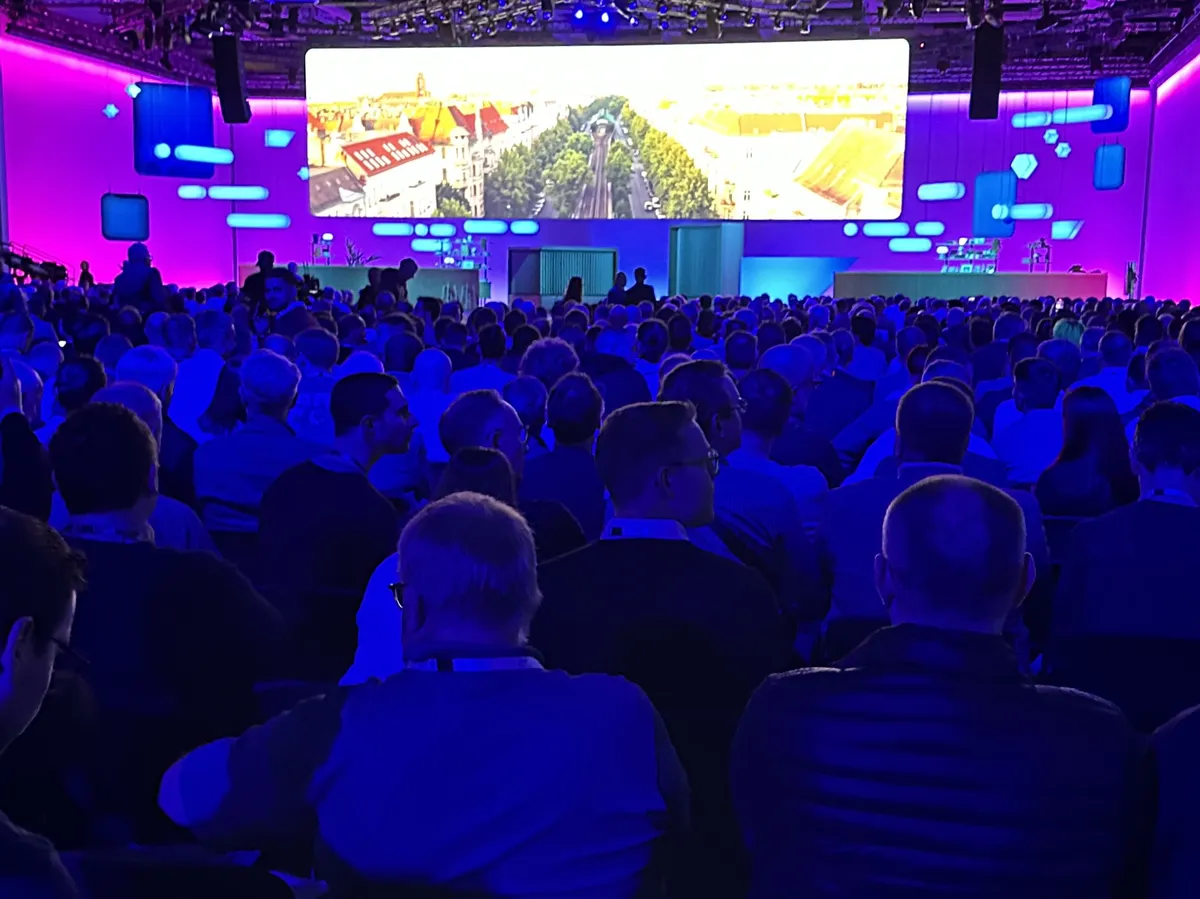
The Six-Minute Paradox
If those six minutes turned me into a vessel of anxiety—needing to demonstrate that our demo was not only technically elegant but also covered a real use case with practical utility applicable as a proof of concept—how could SAP not experience that same pressure? They're in exactly the same situation, but multiplied by a thousand.
Many of us who develop software are eager to reach the productivity plateau with AI: using it as a means, not an end. We've witnessed the evolution from the initial recognition of a powerful technology to its application in cases that truly add value. The path has been winding. Thinking that a black box generating content through cosine similarity would be the holy grail that large companies would buy without hesitation... perhaps wasn't the smartest starting strategy.
However, the conviction of an entire industry, the faith in a technological advance practically indistinguishable from magic, the widespread movement of all available levers, have finally led us to extract something useful from all this, at least in enterprise software: we've learned to chain the beast, to make it more deterministic and align it with our objectives.
So SAP has its “6 minutes” every time an event like this occurs: “6 minutes” to convince the world that they are AI-driven, that they are not lagging behind, but that they are also based on their customers' use cases.
From APIs to Agents: The New Orchestration
Not long ago, we orchestrated API calls. Now we orchestrate agents that execute simple, straightforward tasks, with their guardrails, their fallbacks, their human-in-the-loop checkpoints. What we once delegated to a subroutine, we now trust a dozen agents to reach the same conclusion. We've added an additional layer over the known because, let's be clear, you don't mess with money: payrolls, shipments, and invoices must be processed at least as well as before.
SAP used extensively the J-word along the TechEd week, and recognizes this reality—which isn't new—by enabling agents, evolving their no-code tool to generate new agents, and, pay attention, allowing these agents to communicate with the outside world. This is no small feat. If anything has historically characterized SAP, it's their tendency to build lock-ins around their products as a hallmark of the brand (although, to be fair, this is a global trend), buying time while consolidating their position. Now it seems they assume that strategy won't work. The feeling of acceleration in which we live—because it is another issue to analyze whether we are really in the midst of such acceleration or whether it is simply our perception—leads us to intuitively conclude that locking themselves in their silo, no matter how large and well-decorated, is no longer an option. Agents, A2A, MCP, skills... they repeat the entire technological zeitgeist because in their "six minutes" they need to demonstrate they're present, that they understand what's happening, and that they're taking the necessary steps to not fall behind.
The Eternal Love for ABAP
In parallel, SAP continues their policy of showing love to their coders, especially that refugee group developing in ABAP. As a long-time abaper I've got my own thoughts on this, but enclosed in their narrative there's time for a wink in their "6 minutes", to dramatize their love for that mass of workers who've dedicated their professional lives to a language that, let's admit it, isn't the most glamorous in class. The announcement of the long-awaited migration of ADT from Eclipse to VSCode sounds like a promise of eternal love: "We love you, we think about you a lot, but the gift isn't ready yet. Maybe next year."
The LLM model specifically trained on ABAP seems like a significant detail to me, although definitely not an original idea. Anyway, we've all tried generating ABAP code with LLMs these past years and discovered that this language seemed immune to code assistants, so we'll test it as soon as we can, no doubt.
Academic Innovation vs. Real Applicability
Other announcements caught my attention from a technical standpoint, like the relational model SAP-RPT-1. It seems like commendable academic work to me, similar to developing an engine that runs on vegetable oil instead of gasoline: impressive as an intellectual exercise, but what's the real use case? Will SAP-RPT-1 be able to offer better results than text LLMs assisted by MCPs that provide that contextual knowledge layer?
After all, with our own MCP we can consider not only the usual relationships between SAP tables but add the particularities of each specific case. Like much of what was presented at this TechEd—my first physical TechEd—there wasn't time to demonstrate it in those fateful "six minutes".